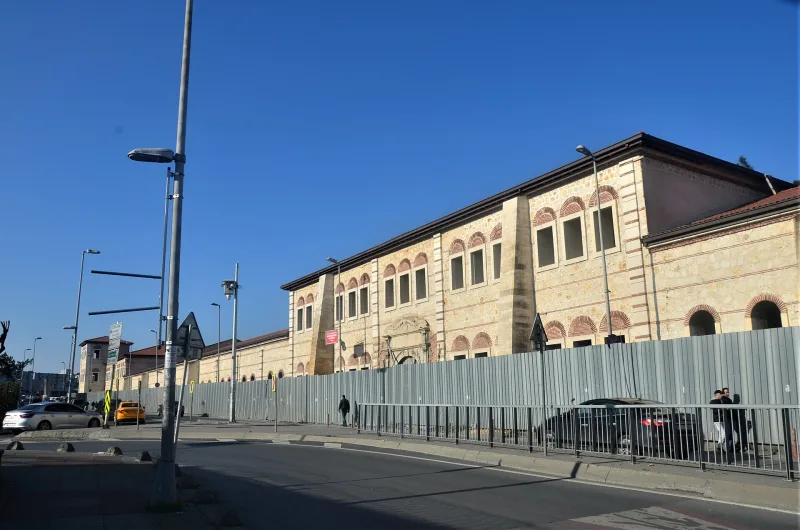
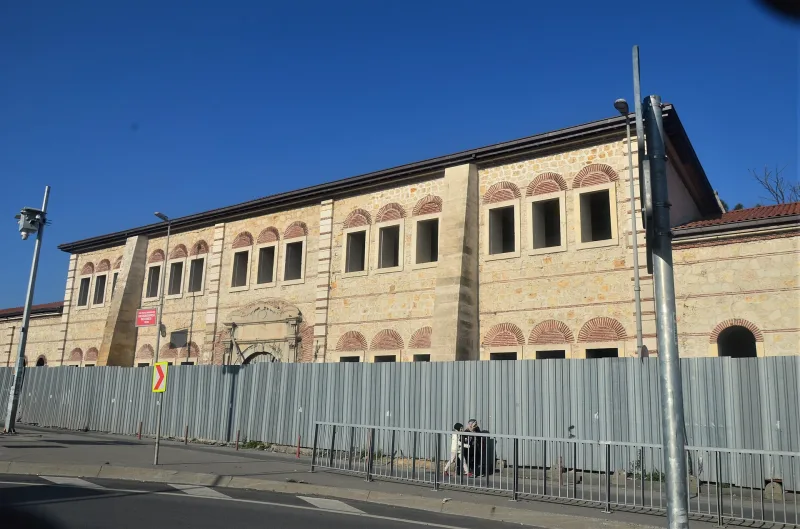
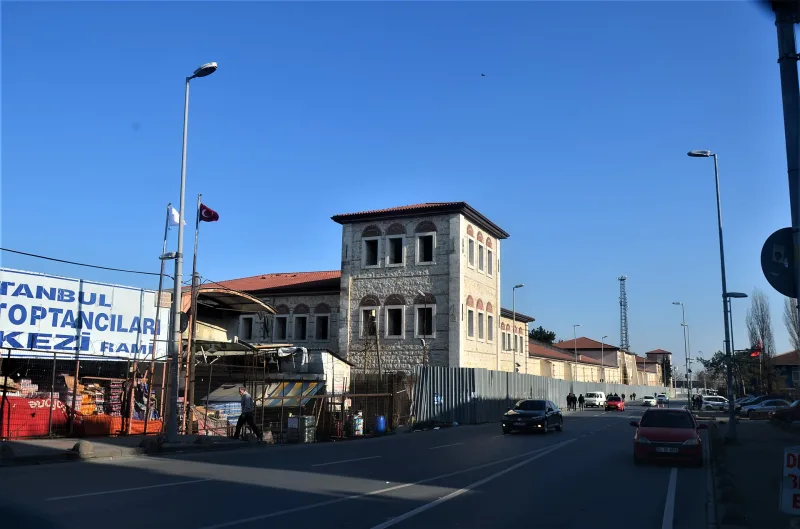
The Rami Barracks—an Ottoman fortress built as part of military reforms that became Istanbul’s largest library
The Rami Barracks in the Eyüp Sultan district on the European side of Istanbul are one of Turkey’s most unexpected landmarks: more than two and a half centuries of military history, a fire during the French occupation, a decade and a half as a food market with 1,500 stalls, and, finally, its transformation in 2023 into one of the country’s largest public libraries. When you first step into the 200-by-200-meter courtyard, surrounded by eight stone wings, you grasp the scale: 75,000 square meters of land, 33,000 square meters of covered space, and a building where Sultan Mahmud II personally lived for nearly two years while ruling the empire. The Rami Barracks is a rare instance where austere military walls become a meeting place for generations, languages, and eras.
History and Origin of the Rami Barracks
Construction of the complex began under the twenty-sixth Ottoman sultan, Mustafa III, and took place from 1757 to 1774—an era when the empire was attempting to reorganize its army along European lines. The location for the garrison was not chosen by chance: the remote suburb of Eyüp was called “Rami Çiftliği,” and here, at the foot of the hills, there was a farm with pastures and warehouses. Troops setting out on campaigns to Rumelia used Rami as a logistical support point, and the barracks were originally known as the Artillery Barracks (Topçu Kışlası).
The turning point came in 1826, when Mahmud II suppressed the Janissary revolt and disbanded the old corps. In place of the former army, a new regular force was formed—the “Asakir-i Mansure-i Muhammediye,” meaning “the victorious warriors of Muhammad.” In 1828–1829, Rami was extensively rebuilt and expanded specifically for the soldiers of this reform. Since the Janissary barracks in Levent had been destroyed by artillery fire, the new army literally moved in under the walls of Rami. It was here that the new military uniform was first unveiled to the public: fez hats, European-style tunics, and “kalavra” boots—Rami became a showcase for the clothing reform initiated by the sultan.
During the Russo-Turkish War of 1828–1829, Mahmud II turned the barracks into his residence: for 617 consecutive days, he ruled the state from there. Even after the Treaty of Adrianople on September 14, 1829, the sultan remained in Rami until January 16, 1830—to hunt, rest, and receive ministers. For about two years, the empire operated “at the barracks’ address.” In 1836–1837, students of the Military School (Mekteb-i Harbiye) were transferred to the building, and the complex came to be known as “Fünun-i Harbiye-i Mansure”—“the sciences of the victorious army.” Later, during the Crimean War of 1853–1856, the headquarters of Sultan Abdul-Mejid I was located here, and the barracks acquired their final architectural appearance under Abdul-Hamid II (1876–1909).
Architecture and What to See
In form, the Rami Barracks is a huge enclosed rectangle of stone masonry, built around a 200-by-200-meter parade ground. The complex has eight wings and five blocks, and the total usable area of the site reaches 220,000 square meters. It is neither a palace nor a fortress, but rather the functional architecture of a classic 18th–19th-century Ottoman military school: long arched galleries, rows of identical window openings, thick load-bearing walls, and courtyards for troop formations.
The Inner Courtyard and Stonework
The main courtyard, measuring 200 by 200 meters, is the heart of the complex. Following restoration, the paving and proportions were returned to their historical state: upon entering through one of the gates, visitors see an almost endless perspective of arcades. The stonework—the primary building material—has been repaired numerous times over the past two and a half centuries, and today the walls contain layers from different eras: fragments from the time of Mustafa III, reconstructions from the reign of Mahmud II, and the meticulous work of restorers from the 2010s. The courtyard looks particularly striking at sunset, when warm light falls on the gray Istanbul limestone.
A Mosque and Minaret with a Tragic History
A mosque has stood on the barracks grounds since the very beginning. In 1835, it was given a wooden dome, and a year later, a stone minaret. During the Allied occupation of Istanbul following the Mudros Armistice, the mosque was used as a gunpowder depot: on June 28, 1919, a fire broke out there. The mosque building burned down completely, the adjacent hamam was partially damaged, and only the minaret survived from the Muslim complex. This solitary stone spire still stands as a silent witness to the occupation and one of the most striking features of the Rami panorama.
Eight wings and five blocks
The interior layout consists of a series of long barracks-style buildings. Eight wings diverge symmetrically, while five blocks set the rhythm of the facades. After Rami was converted into a library in 2023, these halls housed reading rooms, children’s sections, areas for collectors, exhibition spaces, and a city museum. The library’s collection comprises approximately seven million print and digital items, making Rami one of the country’s largest libraries. In addition to books, the complex houses about 120 commercial spaces: bookstores, gift shops, banks, cafes, restaurants, and movie theaters. A separate level is reserved for parking, accommodating 1,200 vehicles.
Restoration and Return to the City
The decision to restore the dilapidated and poorly renovated complex was made in 2010 by the city’s Department of Topography and Monuments. The tender was announced on August 4, 2014, and the restoration took about ten years. The cost of the work amounted to 200 million Turkish lira (about $43.3 million at the time of conversion). Restorers restored the building’s historical and cultural appearance by reconstructing lost elements based on archival drawings. Since January 13, 2023, Rami Kışlası has been open as Rami Kütüphanesi—the Rami Library, operating under the auspices of the Ministry of Culture and Tourism.
Floor-by-Floor Logic and Materials
If you look closely at the facades, the building’s entire history is revealed: the lower tiers are more massive, the windows are smaller, and the masonry is denser—this is the typical defensive logic of an 18th-century garrison. The upper floors are more airy, with wider arched openings: they were rebuilt during the reign of Mahmud II, when the building became the “imperial headquarters.” In certain places, restorers intentionally left small sections of the old masonry exposed—a kind of “window into history”—through which one can see how construction techniques have evolved over two and a half centuries. Inside, the staircase, railings, and wooden doors are finished in a subdued color palette—without gilding—in keeping with a modest military aesthetic, which lends the space a particular solemnity reminiscent of 19th-century Russian Suvorov barracks.
Interesting Facts and Legends
- Mahmud II spent about two years at the Rami Barracks: 617 days of war and several more months of rest following the Treaty of Adrianople. In essence, the empire was governed all this time from a single garrison on the outskirts of Istanbul.
- When the officers of the new army first marched onto the parade ground in fez hats and European-style uniforms, crowds of onlookers gathered at the gates specifically to see the “reformed” attire—Rami became a fashion runway for Mahmud II’s military reforms.
- During the occupation of 1918–1923, Algerian riflemen brought in by the French were stationed in the barracks. According to legend, fighters from the Turkish National Defense Group (Millî Müdafaa) managed to secretly transport most of their weapons and ammunition to Anatolia right under the French’s noses.
- From 1986 until the early 2020s, the barracks housed the massive wholesale market “Rami Kuru Gıda Çarşısı”—about 1,500 food stalls. Merchants who had been obstructing traffic along the shores of the Golden Horn in Eminönü and Ünkapı moved there. Many Istanbulites still refer to the building as the “old food market.”
- On October 6, 1923, the day Istanbul was liberated by the Turkish army, Rami became one of the first sites transferred from the French to the Republic—a symbolic moment that is now celebrated annually as the city’s Liberation Day.
How to get there
The Rami Barracks are located in the Eyüp Sultan district, on the European side of Istanbul, northwest of the historic center. The easiest way to find your way is to head toward the Rami neighborhood and the street leading from Topçular Square. Coordinates: 41.0492° N, 28.9156° E. The most convenient public transportation is city buses departing from Eminönü, Taksim, Mecidiyeköy, and Eyüp: the “Topçular” and “Rami Kışlası” stops are within walking distance. The M1 Metrobus line passes by the “Topkapı” station, from where you can reach the destination by bus or tram in 10–15 minutes.
From Istanbul Airport (IST), take the M11 metro to transfer to the M7 and then continue by bus—total travel time is about 1 hour and 15 minutes. From Sabiha Gökçen Airport (SAW), it’s more convenient to take the Havabus shuttle to Taksim and then continue by bus. It is about 8 kilometers from the historic Sultanahmet Square to Rami: by taxi—20–30 minutes depending on traffic, by public transport—about 45 minutes. There is a large parking lot on the complex grounds, making the trip by car quite convenient.
Tips for travelers
The best time to visit is spring (April–May) and fall (September–October): it’s not too hot during these seasons, and strolling through the vast courtyard is a real pleasure. In winter, the stone arcades are exposed to the wind from the Golden Horn, so be sure to dress warmly. In summer, on the other hand, there is always cool shade under the arcades, offering relief from the Istanbul heat. Allow at least 1.5–2 hours for your visit—this will be enough to walk through the courtyard, explore several wings of the library, and climb up to the observation deck near the minaret.
Inside the building, there is a freely accessible reading room, so you can bring a laptop, sit with a book, or simply relax after a walk through Eyüp. For travelers with children, there is a separate children’s section with games and activities, and collectors should check out the special rare books section. Cafes and small restaurants located in the commercial spaces are convenient for a break—prices are reasonable, and the cuisine is mostly Turkish. Wi-Fi is free, and access to most areas is open.
A few practical details: admission to the library is free, but it’s best to carry your passport—you may be asked for it at the registration desk. Photography is permitted in the general reading rooms without a flash, but out of consideration for others, it’s best to avoid taking photos of people in the children’s area. There are several quiet rules in effect on the premises, especially in the main reading building, so loud phone conversations are not welcome here. If you’re traveling with a Russian-speaking group, it’s helpful to download an offline map of the area: the signs inside the complex are mostly in Turkish and English, and navigating the eight wings can be confusing without a map.
It’s a good idea to combine your visit with other attractions in the Eyüp Sultan district: the Eyüp Sultan Mosque, the funicular to Pierre Loti Hill, and the Golden Horn panorama. From Rami, you can walk there in 25–30 minutes or take a bus. Before visiting, however, it’s worth checking the current opening hours and event schedule on the official Rami Kütüphanesi website, as some of the halls are periodically closed for exhibitions and events. The Rami Barracks offer a unique itinerary where, in a single day, you can witness the reform of the Ottoman army, the legacy of European occupation, and a modern cultural center; this is precisely why the Rami Barracks deserve a place on any off-the-beaten-path tour of Istanbul.